

As a trusted supplier of British Standard Chains, I often receive inquiries about the fatigue life of these high - quality products. Understanding the fatigue life of British Standard Chains is crucial for both manufacturers and end - users, as it directly impacts the performance, reliability, and cost - effectiveness of the machinery in which they are used.
Factors Affecting the Fatigue Life of British Standard Chains
Material Quality
The quality of the material used in the production of British Standard Chains is a fundamental factor influencing their fatigue life. Chains are typically made from high - grade steel, which provides excellent strength and durability. For instance, the steel used in British Standard Roller Chains is carefully selected to withstand the stresses and strains of continuous operation. High - carbon steels and alloy steels are commonly used due to their high tensile strength and resistance to wear. These materials are heat - treated to enhance their mechanical properties, such as hardness and toughness. A well - heat - treated chain will have a more uniform microstructure, which can better resist crack initiation and propagation under cyclic loading, thereby extending its fatigue life.
Chain Design
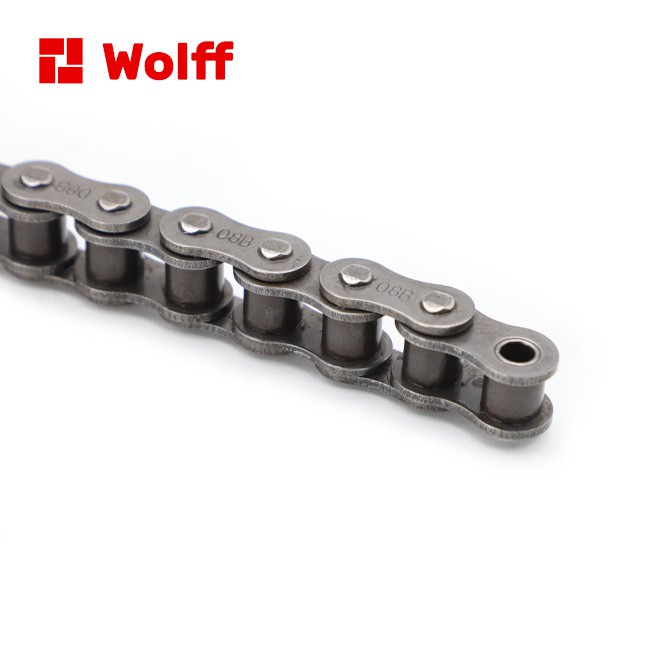
The design of the chain also plays a significant role in determining its fatigue life. British Standard Chains are designed with specific dimensions and geometries to ensure optimal performance. For example, the pitch of the chain, which is the distance between the centers of adjacent pins, affects the load - carrying capacity and the distribution of forces along the chain. A chain with a larger pitch can generally handle higher loads but may be more prone to fatigue under high - speed or high - frequency operation. Additionally, the shape and size of the rollers, bushings, and pins are carefully engineered to minimize friction and wear. The Simplex Roller Chain British Standard 08B is a classic example of a well - designed chain, with its precisely machined components that work together to provide smooth and efficient power transmission.
Operating Conditions
The operating conditions under which the chain operates have a profound impact on its fatigue life. Factors such as load magnitude, speed, temperature, and lubrication all contribute to the overall stress levels experienced by the chain. High loads can cause excessive stress on the chain components, leading to premature fatigue failure. Similarly, high - speed operation can increase the frequency of cyclic loading, accelerating the crack growth process. Temperature also affects the mechanical properties of the chain material. At high temperatures, the strength and hardness of the steel may decrease, making the chain more susceptible to fatigue. Proper lubrication is essential to reduce friction and wear between the chain components. A well - lubricated chain will experience lower stress levels and a longer fatigue life. For example, in a manufacturing plant where the chain is used in a conveyor system, the operating environment may be dusty or dirty. In such cases, a lubricant with good anti - wear and anti - corrosion properties is required to protect the chain and extend its service life.
Testing and Evaluation of Fatigue Life
Laboratory Testing
To accurately determine the fatigue life of British Standard Chains, laboratory testing is often conducted. These tests typically involve subjecting the chain to cyclic loading under controlled conditions. The load magnitude, frequency, and number of cycles are carefully monitored to simulate real - world operating conditions as closely as possible. One common testing method is the fatigue test, where the chain is repeatedly loaded until it fails. The number of cycles to failure is recorded, and this data is used to estimate the fatigue life of the chain under different operating conditions. For example, a chain may be tested at different load levels to determine its fatigue limit, which is the maximum stress level that the chain can withstand without failing after an infinite number of cycles.
Field Testing
In addition to laboratory testing, field testing is also an important method for evaluating the fatigue life of British Standard Chains. Field testing involves installing the chain in actual machinery and monitoring its performance over an extended period. This type of testing provides valuable real - world data on the chain's behavior under different operating conditions. For example, a chain used in a mining application may be monitored for several months to observe its wear and fatigue characteristics. The data collected from field testing can be used to validate the results of laboratory testing and to make improvements to the chain design or material selection.
Extending the Fatigue Life of British Standard Chains
Proper Installation
Proper installation of the chain is crucial for extending its fatigue life. The chain should be installed with the correct tension to ensure even distribution of forces along the chain. Over - tensioning the chain can cause excessive stress on the components, while under - tensioning can lead to chain slippage and increased wear. Additionally, the sprockets should be properly aligned to prevent uneven loading on the chain. A misaligned sprocket can cause the chain to experience lateral forces, which can accelerate fatigue failure.
Regular Maintenance
Regular maintenance is essential to keep the chain in good working condition and to extend its fatigue life. This includes regular inspection of the chain for signs of wear, such as elongation, pin wear, and roller damage. Any worn or damaged components should be replaced promptly to prevent further damage to the chain. Lubrication should also be regularly checked and replenished to ensure that the chain is properly lubricated. In addition, the chain should be cleaned periodically to remove dirt, debris, and contaminants that can cause wear and corrosion.
Upgrading to Higher - Quality Chains
In some cases, upgrading to a higher - quality chain may be necessary to extend the fatigue life. British Standard Stainless Steel Chains offer several advantages over traditional steel chains. Stainless steel is more resistant to corrosion, making it suitable for use in harsh environments. It also has good mechanical properties, which can improve the fatigue life of the chain. For example, in a food processing plant where the chain is exposed to moisture and chemicals, a stainless steel chain would be a better choice than a traditional steel chain.
Conclusion
The fatigue life of British Standard Chains is influenced by a variety of factors, including material quality, chain design, and operating conditions. By understanding these factors and taking appropriate measures to extend the fatigue life, such as proper installation, regular maintenance, and upgrading to higher - quality chains, users can ensure the reliable and efficient operation of their machinery. As a supplier of British Standard Chains, I am committed to providing high - quality products and technical support to our customers. If you are interested in learning more about our British Standard Chains or have any questions regarding their fatigue life, please feel free to contact us for a detailed discussion and potential procurement.

References
- Machinery's Handbook, 31st Edition
- Standards for British Standard Chains, British Standards Institution
- Research papers on chain fatigue analysis and testing from relevant engineering journals