


Roller Chain Links

Wolff Chain Drive: Your Professional Roller Chain Links Manufacturer!
Qingdao Wolff Chain Drive Co.Ltd. is located in the industrial zone of the city, covering an area of about 10,000 square meters. Our factory has multiple workshops, which are used for different production links and product manufacturing. We continue to innovate, develop new products, meet all customer requirements, and have stable delivery times.
Our Advantages
Rich Experience & Production Market
Our company has a production history of more than 30 years, and our products have won unanimous praise from customers. Wolff chains are popular in Domestic and foreign markets such as the United States, South America, Europe, the Middle East, Southeast Asia and Africa markets.
Quality Control
Our products are produced and inspected strictly in accordance with GB, AISI, ASTM, API, JIS, BS so as to control and safeguard the quality of products. We adopt strict testing standards and processes to ensure that our products meet international standards and customer requirements. We have a professional quality inspection team to conduct comprehensive inspection and testing of each production batch.
Advanced Equipment
Our factory is equipped with advanced production equipment and technology, including automated production lines, CNC machine tools, laser cutting machines, etc. These equipment can efficiently complete the manufacturing and processing of products and improve production efficiency.
High Quality Product
All our products fully comply with international standards such as ISO\DIN\ANSI\BS\JIS. Wolff has successfully passed ISO9001 quality management system, SGS inspection and BV inspection certification.
-
![Offset Link Drive Chains]() Offset Link Drive ChainsOffset Link Drive Chains are chain connection method commonly found in roller chain transmission systems. It consists of two roller chain joints to realize chain connection and power transmission.read more
Offset Link Drive ChainsOffset Link Drive Chains are chain connection method commonly found in roller chain transmission systems. It consists of two roller chain joints to realize chain connection and power transmission.read more -
![Offset Link for Chain]() Offset Link for ChainOffset link for chain is a mechanical transmission device that usually consists of a chain and a connecting rod. A chain is a series of interconnected links used to transmit power or motion. The...read more
Offset Link for ChainOffset link for chain is a mechanical transmission device that usually consists of a chain and a connecting rod. A chain is a series of interconnected links used to transmit power or motion. The...read more -
![Roller Chain Offset Link]() Roller Chain Offset LinkA roller chain offset link is a type of link used in roller chains to connect two ends of a chain together. It is called an "offset" link because it has a slightly different design compared to the...read more
Roller Chain Offset LinkA roller chain offset link is a type of link used in roller chains to connect two ends of a chain together. It is called an "offset" link because it has a slightly different design compared to the...read more -
![Industrial Chain Links]() Industrial Chain LinksIndustrial Chain Links also called a chain connector, mechanical part used to connect chains. Chain joints usually consist of two nested parts that are held together by bolts, nuts, or other...read more
Industrial Chain LinksIndustrial Chain Links also called a chain connector, mechanical part used to connect chains. Chain joints usually consist of two nested parts that are held together by bolts, nuts, or other...read more -
![Roller Chain Connecting Link]() Roller Chain Connecting LinkA roller chain connecting link is a type of mechanical fastener used to connect two ends of a roller chain. Roller chains are commonly used in machinery and power transmission systems to transmit...read more
Roller Chain Connecting LinkA roller chain connecting link is a type of mechanical fastener used to connect two ends of a roller chain. Roller chains are commonly used in machinery and power transmission systems to transmit...read more

Introduction to Roller Chain Links
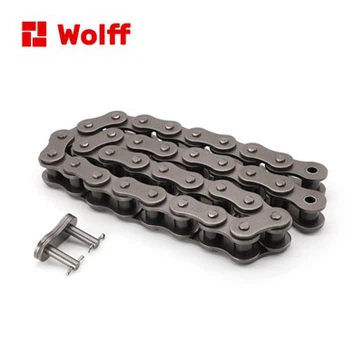
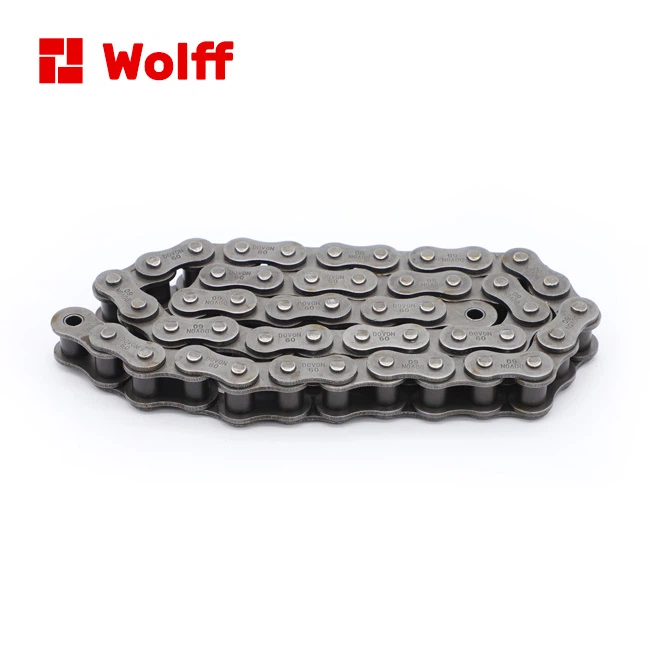
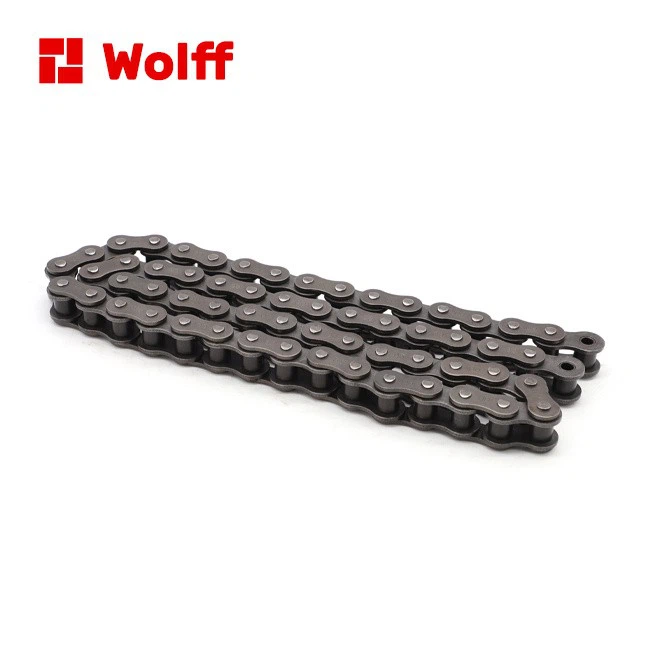
Roller chain links are individual links that are added to an existing chain to replace a worn link or to extend the length of the chain.
Types of Roller Chain Links
Roller Chain Connecting Link
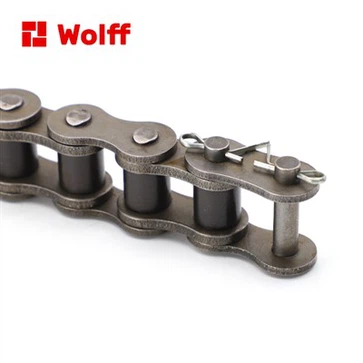
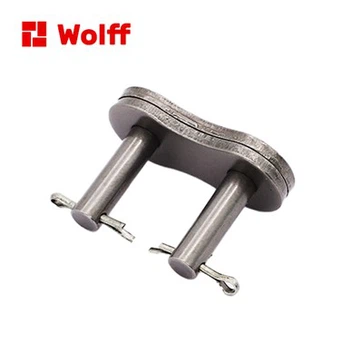
Roller Chain connecting links are also commonly known as master links. These links are designed to assemble and dis-assemble using a spring clip or cotter pin. There is a comprehensive selection of master links for single and double pitch roller chains, compatible with both North American ANSI and metric standards, encompassing all sizes of chain from #25 and 03B to #240 and 56B.
Roller Chain Offset Link
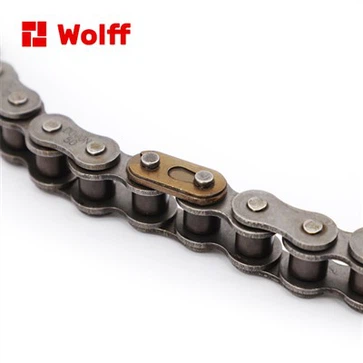
Roller chain offset links are used for making repairs and for adjusting the length of a roller chain. They are also commonly known as half links because when assembled they only add half of a pitch. A standard offset link consists of on roller, one bushing, one pin with a cotter, and two offset side plates to hold everything in.
Roller Chain Roller Link
Roller links are the inside links of roller chain, because of this they are also typically known as "inside links". A roller link consists of two bushings, two rollers, and two inside plates that are pressed on to hold everything together. There are few exceptions to this design like roller-less bushed chains such as #25 & #35 ANSI standard roller chains, these types of roller links only consist of two bushing with two inside plates.
Installation of Roller Chain Link

Line Up the Chain Ends
Make sure your chain length is correct. Line up the ends of the roller chain so the pins of the master link can be inserted. Notice that the chain ends are placed on the sprocket so this automatically happens! This makes for an easy installation of the master link pins.
Install the Master Link Spring Clip
Orient the master link spring clip so the open end trails the closed end. In other words, the closed end of the clip needs to be at the head of the chain travel when the sprocket is moving your go kart forward.
Once you have the master link spring clip lined up, use a flat head screwdriver to push the clip into the grooves in the pins. You will know when it seats in the grooves when you hear a ‘click’ as it snaps into place.
Install the Plate with Pins
The master link plate with pins is inserted so the grooves in the pins are facing outward. The reason why you want the pins to face outward, is so that you can access it easily for this installation, as well as any future disassembly.

Install the Other Plate
The plate without pins is inserted over the pins of the master link. Make sure you can see the grooves of the pins so that the spring clip can be installed correctly.
How to Count Roller Chain Link
Understand the Chain Anatomy
Before counting the links, it is crucial to familiarize yourself with the basic structure of a chain. A standard chain is composed of a series of inner and outer plates joined together by connecting pins. Each link consists of an inner plate, an outer plate, and a connecting pin in between them.
Establish a Reference Point
To accurately count the links, you need to identify the reference points. Start by locating one end of the chain and choose a reference point, such as the first inner plate or outer plate. For more accurate counting, you can mark that specific point. You can use a grease pen for marking.
Start Counting Links
With the reference point established, start counting by moving in one direction (usually towards the opposite end of the chain). Each complete link consists of one inner plate, one outer plate, and the connecting pin between them.
Double-Check Your Count
To ensure accuracy, it is advisable to count the links twice independently. This double-checking process helps eliminate any errors or discrepancies that may arise during the initial count. Consistency in your counts is crucial for accurate chain measurements.
Notice the Half-Links
In some cases, especially with bicycles or specialized chains, you may encounter half-links. These are unique chain links that allow for more precise chain length adjustments.
Record the Link Count
Once you have reliably counted the links in the chain, record the number for your reference. This count can serve various purposes, including chain replacement, sizing, or ongoing maintenance.
How to Take Roller Chain Links Out of Roller Chain



Gather Tools
To successfully remove links from a roller chain, you will need the following tools:
● Roller Chain Breaker Tool: This special tool will help you gently push out the chain pins.
● Wrench: Choose a wrench that fits the nuts that hold the chain to the machine.
● Safety equipment: Wear gloves and goggles to protect yourself throughout the process.
Positioning
Before proceeding, make sure the machinery attached to the roller chain is turned off and the chain is cool enough to operate. Use a wrench to loosen and remove the nuts holding the chain in place, allowing it to hang freely.
Identify Connection Links
Each roller chain has a connecting link, also known as a master link, that has a clip or retaining plate. Find this link by examining the chain and identifying the unique connector design.
Break the Chain
Place the roller chain breaker tool on the connecting link so that the tool’s pins line up with the chain’s pins. Slowly rotate the handle or press down on the tool until the pin begins to push out. Continue to apply pressure until the pin is pushed out all the way, separating the roller chain.
Remove the Link
After the chain is separated, carefully slide the connecting link off the roller chain. This will result in open ends on the chain, which can be reattached after removing the required number of links.
Remove Unwanted Links
Calculate the number of links that need to be removed for the intended purpose. Using the roller chain breaker tool again, line up its pin with the pin of the selected link. Apply pressure slowly until the pin is partially pushed out. Repeat this step on the other side of the same link until the pin is fully pushed out.
Detach Links
Once the pin is fully pushed out, separate the required number of links from the rest of the chain. Put those links aside and make sure to put them away safely to avoid losing any important components.
Reattach the Chain
After removing the required number of links, the roller chain can be reattached. Take out the open end of the chain and the connecting link you removed earlier. Align the pins connecting the links with the corresponding holes in the roller chain, securing the position of the retaining plate or clip (if applicable).
Locking the Chain
To secure the connecting link in place, push the pin back through the chain hole. Make sure the pins are properly aligned and protrude evenly from both sides. For clip-type connecting rods, insert and hold the clip in the correct position.
Secure the Chain
Once the chain is back in place, use a wrench to tighten the nuts and secure the roller chain to the machine. Make sure the chain is properly tensioned and aligned to avoid any potential problems during operation.
FAQ
As one of the leading roller chain links manufacturers and suppliers in China, we warmly welcome you to wholesale cheap roller chain links from our factory. All customized products are with high quality and low price. Contact us for quotation.